The fruit is a characteristic feature of flowering plants. This is a ripened ovary that develops after fertilizatio the last step in the process of sexual reproduction of flowering plants. After seeds are formed through fertilization, the tissue around those seeds starts to grow, forming the fruit. Fruits help the plant to disperse the seeds, through different mechanisms that depend on the type of fruit. Fruits can be either dry or fleshy fruits. Animals who eat fruits will often disperse the seeds to other areas. Some dry fruits can attach themselves to the feathers and fur of animals and “catch a ride” to another area where they can grow without competition. Other fruits resemble wings and will fly with the wind. Sometimes the fetus develops without fertilization, which is called a parthenocarpic fruit.
TYPES OF FRUITS
FLESHY FRUIT.
Berries
Botanically, berries are defined as fleshy fruits whose two innermost tissues are fleshy (endocarp and mesocarp) and they usually contain many seeds inside. The endocarp is the tissue in direct contact with the seeds (endo – inside), while the mesocarp (meso – middle) is the tissue between the endocarp and the fruit’s outer tissue, the exocarp (exo – outside). This definition can be very confusing because in English we use the term “berry” to describe a fruit that does not necessarily fit this botanical definition. For example, strawberries are not considered berries in the botanical sense, since their fruits and seeds are located on the outside of the edible red fleshy part, which does not belong to the ovary, and these nuts are the fruits on the outside.
According to the botanical definition, kiwis, tomatoes, and bananas are berries.
The varieties of bananas you see in the supermarket have been heavily domesticated by humans and no longer produce seeds. The brown spots you see inside a banana are unfertilized ovules. Wild bananas still produce seeds because their flowers are pollinated.
Berry – a multi-seeded or one-seeded fruit with juicy pulp, but without seeds (there can only be seeds with a hard skin). Examples: tomato, grape, blueberry, currant, kiwi, banana, pepper, eggplant, potato.


Pepo
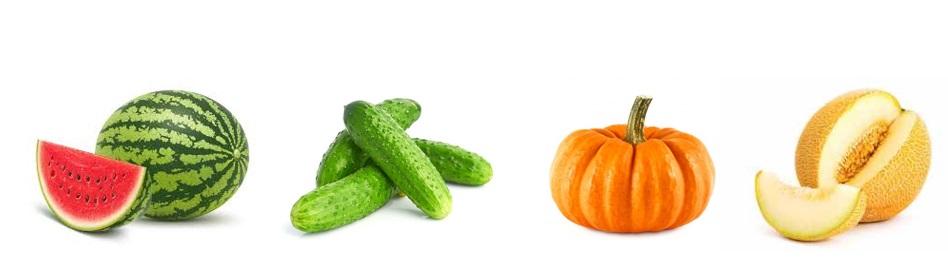
Pepos are modified berries with a hard rim (exocarp). Just like berries, they have fleshy endo and mesocarp and contain lots of seeds inside.
Pomes
Pomes a multi-seeded fruit with juicy pulp, in the formation of which, in addition to the ovary, other parts of the flower. Pomes are accessory fruits, in which flower tissues surrounding the ovary develop into the sweet, edible flesh. Inside the floral tissues you eat, the “core” of the apple is the ovary, consisting of five carpels; exocarp and mesocarp surround the tough endocarp coverings of the seeds. The remnants of sepals (calyx), stamens, and style – shriveled at the end of the fruit opposite the stem, show that the ovary was inferior.
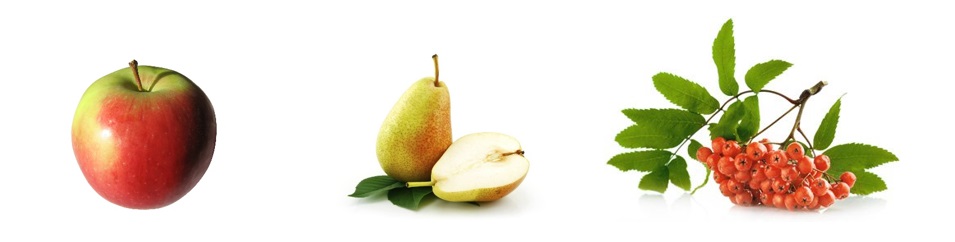
Apples are pomes – fruits whose fleshy, edible parts derive from floral structures surrounding the ovary, rather than the ovary itself. The tissue of the ovary itself – the pericarp – forms a less edible “core”.
Hesperidium

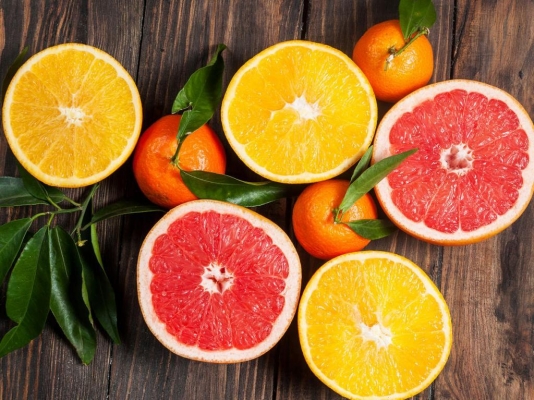
Botanically, citrus fruits are modified berries – simple fruits whose compound, superior ovaries develop into fleshy, more-or-less edible tissue surrounding enclosed seeds.
A fleshy fruit developing from a many carpellary, syncarpous, superior ovary with axile placentation and with endocarp projecting inwards forming distinct chambers, and the epicarp and mesocarp fused together forming the rind of the fruit.
Drupes
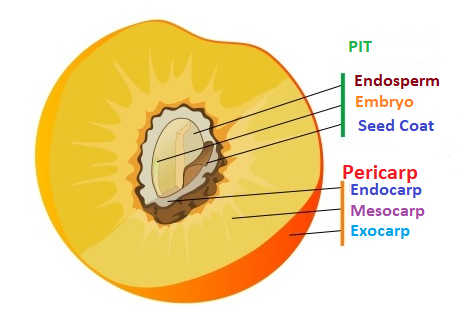
Drupes are fleshy fruits where the endocarp forms a hard enclosure (pit) that surrounds the seed. Drupes usually have a single seed. Examples of drupes include mangoes, peaches, nectarines, and apricots.
A drupe is a juicy, one-seeded fruit with three layers of pericarp: outer skin, middle juicy pulp, inner pit; inside the fruit is a seed (cherry, plum, peach). Dry nuts – coconut, walnut. Assembled drupe raspberry,the flower had many pistils.
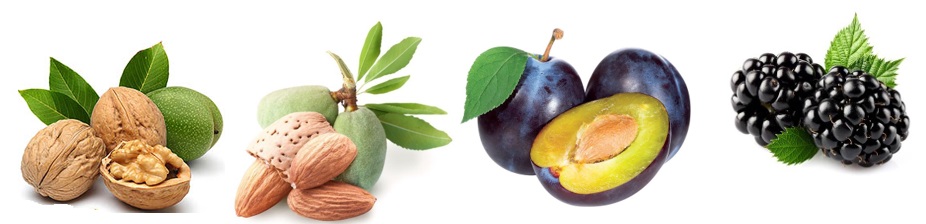
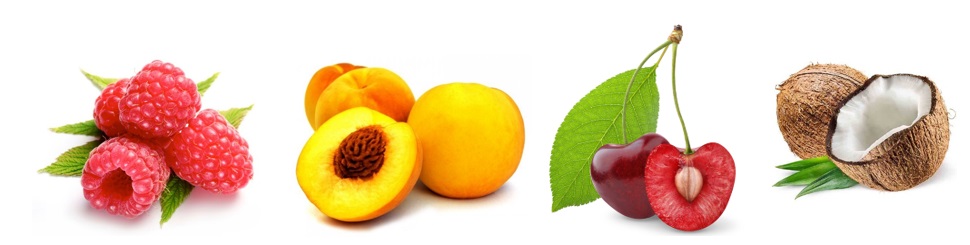
raspberry, apricot, cherry, coconut
Nuts
True nuts are simple fruits made of hardened (stony or woody) ovary walls, which remain unattached to the single seed (rarely two) which they contain. Most come from inferior ovaries and do not open at maturity.
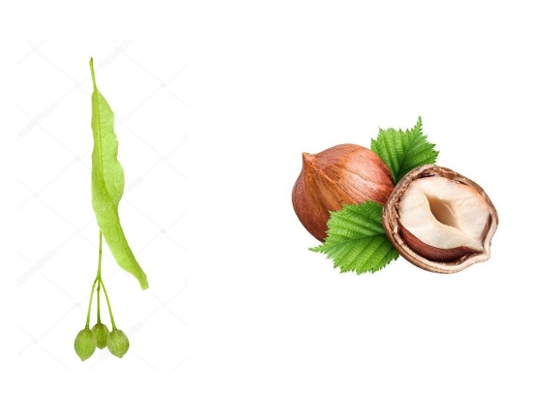
Achenes
Etaerio of achenes

The fruit is called false, because its juicy part does not belong to the pericarp.
Achene is a type of dry fruit that does not split open and contains a single seed. The small brown dots on top of strawberries are examples of achene fruits. Strawberries are a special type of fruit called an accessory fruit, which does not develop from the ovary of the flower but instead develops from the receptacle (the part that connects the flower to the stem).
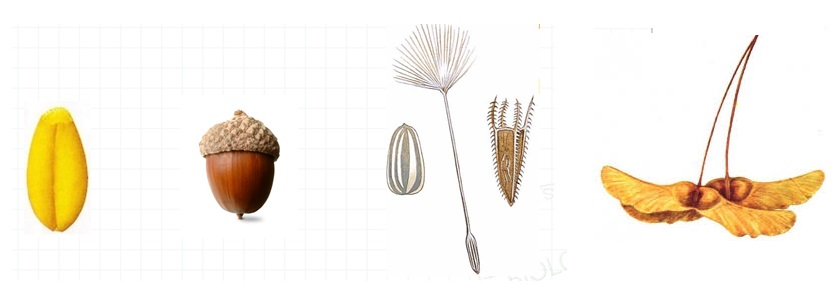
An acorn is a dry one-seeded fruit with a softer, leathery integument (for example, oak).
Achene – is a dry one-seeded fruit with a leathery embryo that does not fuse with the seed coat (for example, sunflower, dandelion).
A caryopsis is a dry one-seeded fruit with a thin integument that grows together with the seed coat (for example, rye, wheat, corn).
Capsule
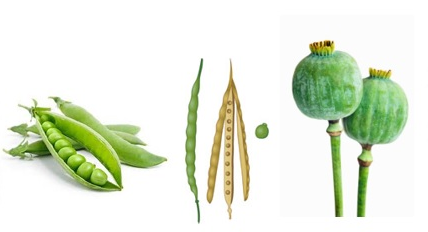
A pod is a dry multi-seeded fruit without a partition inside, which opens with two flaps (peas, beans, soybeans).
A siliqua is a dry multi-seeded fruit with a septum inside, which opens with two flaps (for example, cabbage, mustard).
A capsule is a dry multi-seeded fruit that opens with holes, several flaps, teeth or a lid (for example, poppy, tulip, carnation).